
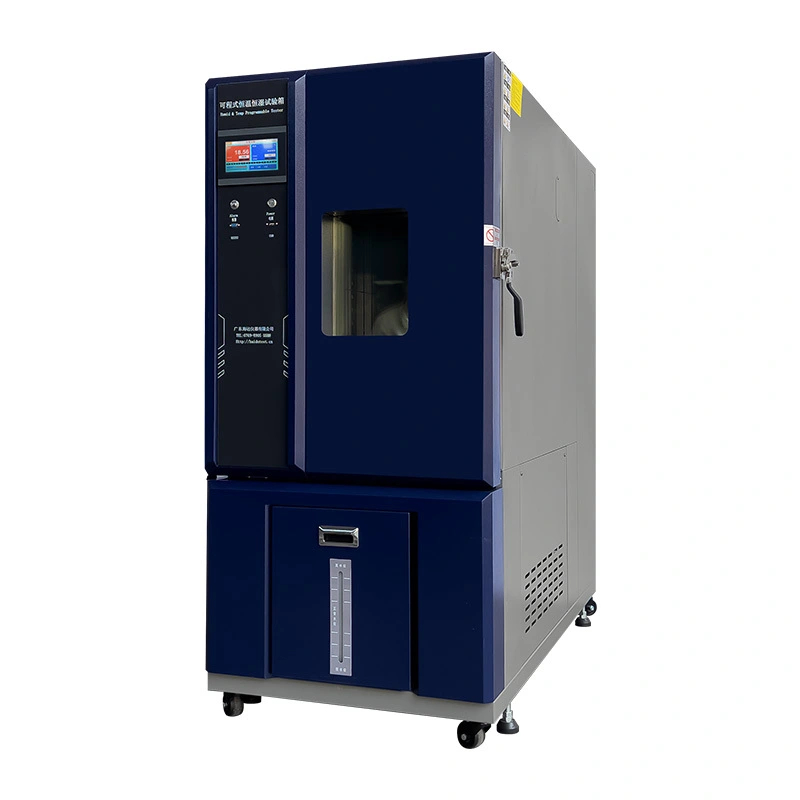
Modern product development requires testing systems that can reproduce demanding environmental conditions with accuracy, consistency, and speed. Industries such as aerospace, automotive, electronics, defense, telecommunications, and industrial manufacturing often need to evaluate how products perform when exposed to reduced atmospheric pressure and controlled temperature conditions. An altitude test chamber provides a controlled environment for these evaluations, while automation can make the entire testing process more efficient and reliable.
Altitude chamber automation combines environmental control systems, sensors, software, data acquisition equipment, and programmable testing procedures. Instead of relying heavily on manual adjustments, automated systems can control pressure, temperature, test duration, monitoring, and data collection. This approach helps laboratories perform repeatable tests while reducing operator workload and improving productivity.
Understanding Altitude Test Chamber Automation
An altitude test chamber is designed to simulate conditions associated with different elevations by controlling the pressure inside a sealed test space. Depending on the chamber design and application, it may also control temperature and other environmental parameters.
Automation adds intelligent control capabilities to this testing environment. Operators can create predefined test profiles that specify pressure levels, temperature conditions, transition rates, dwell periods, and other requirements. Once the test begins, the control system can automatically execute these instructions.
This makes it possible to perform complex environmental sequences without requiring continuous manual intervention. Automated systems can also monitor chamber conditions and product responses throughout the test.
How Automation Improves Testing Efficiency
Faster Test Setup
Manual testing can require repeated configuration of chamber controls and measurement equipment. Automation allows frequently used test profiles to be saved and recalled quickly.
A technician can select the required testing sequence, confirm the relevant parameters, and initiate the procedure. This reduces setup time and makes testing more consistent between different operators and shifts.
Improved Repeatability
Repeatability is essential when comparing product designs, production batches, or prototypes. Small differences in manually controlled pressure or temperature transitions can affect test results.
Automation allows programmed parameters to be applied consistently. The chamber can follow predefined ramps and dwell periods, helping laboratories maintain comparable conditions across multiple test cycles.
Reduced Operator Workload
Environmental testing can involve long test periods during which chamber conditions must remain within specified limits. Automated monitoring reduces the need for technicians to make constant manual adjustments.
Operators can focus on test supervision, product evaluation, and other laboratory responsibilities while the control system manages routine environmental changes.
Real-Time Monitoring and Data Collection
One of the most valuable benefits of an automated altitude test chamber is continuous data acquisition. Sensors can monitor variables such as pressure and temperature while the system records measurements throughout the test.
Instead of collecting observations manually at selected intervals, automated systems can generate detailed time-based records. This provides a clearer view of how environmental conditions changed and how the test sample responded.
Centralized Test Data
Automation software can bring measurements from multiple sensors into a centralized interface. Operators can view current conditions, review historical measurements, and identify unusual changes.
Depending on the system, test information may be stored electronically for later analysis. This can simplify reporting and help organizations maintain better documentation.
Automated Test Reports
Manual report preparation can consume considerable laboratory time. Automated testing platforms can use recorded information to generate structured test reports.
Reports may include programmed conditions, actual chamber measurements, test duration, alarms, and other relevant information. This reduces repetitive administrative work and helps preserve a consistent testing record.
Automated Safety and Alarm Functions
Environmental chambers operate with controlled pressure and temperature conditions, making safety monitoring an important part of system design. Automation can continuously check operating parameters against predefined limits.
If a condition moves outside an acceptable range, the system can trigger an alarm or initiate a programmed response. Depending on the equipment and safety design, automated functions may include stopping a test, returning conditions toward a safe state, or notifying an operator.
These features can provide an additional layer of protection for equipment, test articles, and laboratory personnel.
Creating Flexible Test Profiles
Different products require different environmental test procedures. A single laboratory may need to conduct qualification testing, development testing, production verification, and troubleshooting.
Automated control systems can support multiple test recipes or profiles. Each profile can contain specific pressure levels, temperature requirements, transition rates, hold periods, and sequencing instructions.
Multi-Step Testing
Complex tests can involve several stages. For example, a product may need to move from normal atmospheric conditions to a reduced-pressure environment, remain there for a specified period, and then return gradually to normal conditions.
Automation can execute these stages in sequence without requiring an operator to manually initiate every step. This makes complicated testing procedures easier to manage.
Integration With Laboratory Systems
Modern testing facilities often use several instruments simultaneously. An automated altitude test chamber can potentially integrate with data acquisition systems, measurement instruments, computers, and laboratory software.
Integration helps synchronize environmental conditions with product measurements. For example, engineers can correlate electrical, mechanical, or performance data with the exact pressure and temperature conditions present at each point in the test.
This creates a more complete picture of product behavior under simulated altitude conditions.
Improving Quality Control
Automation can also contribute to quality control by reducing inconsistencies in environmental testing. When the same programmed procedure is applied repeatedly, differences caused by operator adjustments can be minimized.
Manufacturers can use consistent testing procedures to evaluate components and finished products against defined requirements. Automated records can also make it easier to identify deviations and investigate unexpected results.
For organizations performing high volumes of environmental tests, these improvements can support more efficient quality assurance processes.
Challenges When Automating an Altitude Test Chamber
Although automation provides significant advantages, successful implementation requires careful planning. The control system should match the chamber’s capabilities and the laboratory’s testing requirements.
Sensor accuracy, control response, software configuration, data storage, calibration, and cybersecurity can all influence system performance. Operators should also receive appropriate training so they understand both automated operation and manual intervention procedures.
Another important consideration is validation. Automated test profiles should be reviewed and verified before they are used for critical testing. Regular maintenance and calibration are also necessary to ensure that the chamber continues to produce dependable environmental conditions.
The Future of Automated Environmental Testing
Automation is becoming increasingly important as testing requirements become more sophisticated. Modern systems can provide greater connectivity, detailed data logging, remote monitoring capabilities, and increasingly flexible software-based control.
Future environmental testing platforms are likely to place greater emphasis on integrated data management and intelligent monitoring. These developments can help engineers identify trends, reduce unnecessary test repetition, and make better use of laboratory resources.
For organizations handling demanding qualification programs, automation can transform an altitude test chamber from a manually operated piece of equipment into a coordinated testing platform.
Conclusion
Altitude test chamber automation can significantly improve the efficiency of environmental testing by combining precise control, repeatable procedures, continuous monitoring, automated data collection, and safety functions. It reduces routine operator involvement while allowing engineers to manage complex test sequences more consistently.
As manufacturers and research organizations seek faster development cycles and stronger testing documentation, automated environmental chambers can play an increasingly important role. With appropriate system design, calibration, validation, and operator training, automation provides a practical foundation for efficient and dependable altitude simulation testing.