
The global jewelry market thrives on innovation, precision, and efficiency. Whether you are an established high-end brand, an emerging indie designer, or an e-commerce retailer scaling up, finding the right production partner is one of the most critical decisions you will make for your business. For decades, global jewelry brands have relied on Chinese manufacturing hubs to turn creative concepts into market-ready collections. Partnering with a reliable China jewelry manufacturer allows businesses to achieve exceptional craftsmanship, competitive pricing, and high-volume scalability.
However, navigating the vast manufacturing landscape can be challenging. To build a successful supply chain for custom designs and bulk production, you must understand what to look for, how to assess capabilities, and how to maintain quality standards throughout the manufacturing lifecycle.
Why Partner with a China Jewelry Manufacturer?
China remains the epicenter of world jewelry production, offering a complete supply chain ecosystem that few other regions can match. From raw material sourcing to final packaging, the infrastructure in major manufacturing hubs like Guangzhou, Shenzhen, Yiwu, and Dongguan is designed for maximum efficiency.
Access to Advanced Technology and Craftsmanship
Modern jewelry production requires a balance of skilled artistry and cutting-edge technology. A top-tier China jewelry manufacturer invests heavily in modern machinery, including high-precision 3D CAD modeling, automated laser engraving, vacuum casting equipment, and computer-controlled stone-setting tools. This blend of technological accuracy and traditional hand-finishing ensures that intricate custom designs are executed flawlessly.
Scalability and Cost Efficiency
Sourcing materials and producing jewelry in large quantities requires robust infrastructure. Chinese manufacturers benefit from established supply networks for precious metals, gemstones, stainless steel, and brass. This density lowers raw material costs and streamlines logistics, allowing brands to secure competitive unit prices without sacrificing quality during bulk production runs.
Key Factors to Consider When Selecting a Production Partner
Selecting the ideal partner requires thorough research and careful evaluation. Beyond simple price comparisons, consider these essential factors before making a commitment.
1. Expertise in Custom Designs and Prototyping
If your brand specializes in unique aesthetic styles, your manufacturer must have strong original equipment manufacturing (OEM) and original design manufacturing (ODM) capabilities.
- CAD Modeling: Ensure the factory has an in-house engineering team capable of turning rough sketches or 2D vector files into accurate 3D CAD renderings.
- Rapid Prototyping: A qualified China jewelry manufacturer should offer fast sample production, allowing you to evaluate physical prototypes, check weight and comfort, and refine designs before launching mass production.
2. Versatility in Materials and Finishes
Different market segments demand different materials. A high-fashion costume jewelry line requires durable stainless steel or brass with long-lasting PVD gold plating, whereas a fine jewelry line requires certified sterling silver or solid karat gold with genuine gemstones. Verify that the factory has verified experience handling the specific alloys, plating techniques, and stone-setting styles required for your target market.
3. Comprehensive Quality Control Standards
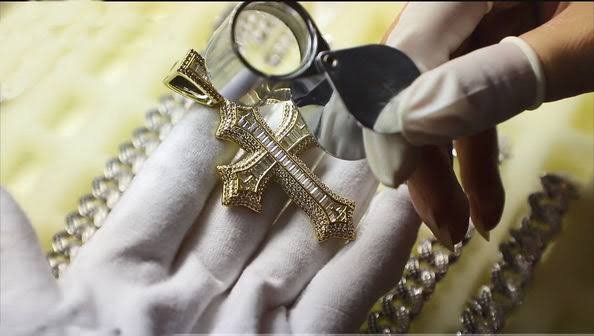
Quality issues can damage a brand’s reputation quickly. Inquire about the manufacturer’s internal quality management system. A reputable China jewelry manufacturer will maintain strict quality control (QC) checks at every stage:
- Incoming Inspection: Testing metals for purity and screening gemstones for color and clarity consistency.
- In-Process Quality Control: Checking casting integrity, solder joints, and stone security.
- Final Inspection: Inspecting plating thickness, clasp functionality, and surface polishes before packaging.
Navigating the Custom Design to Bulk Production Process
Transitioning from an initial design concept to thousands of finished pieces requires a structured workflow. Understanding this process helps build a smoother working relationship with your supplier.
Phase 1: Conceptualization and Design Review
The journey begins when you share your tech packs, reference images, or vector files with the manufacturer. During this phase, the engineering team evaluates the structural feasibility of your design. They may suggest subtle adjustments to stone settings, metal thickness, or chain attachment points to ensure durability during wear and efficiency during mass assembly.
Phase 2: 3D CAD Renderings and Sample Creation
Once the technical details are agreed upon, the factory creates a 3D CAD model. After you approve the digital render, a physical sample is produced using 3D printing or wax carving, followed by casting and hand-finishing. Thoroughly test this sample for fit, weight, plating quality, and overall finish.
Phase 3: Bulk Production and Assembly
After sample approval and deposit confirmation, mass production begins. The China jewelry manufacturer schedules metal casting, stamping, plating, stone setting, and manual polishing across dedicated production lines. Timely updates during this phase ensure that timelines remain on track for seasonal launches or product restocks.
Phase 4: Final Inspection and Logistics
Before shipment, the finished jewelry undergoes final quality audits. Reputable suppliers provide detailed inspection reports and facilitate international freight forwarding, custom documentation, and secure packaging designed to prevent tarnishing or damage during transit.
Best Practices for Building a Successful Long-Term Partnership
Finding a trustworthy manufacturing partner is only the first step; maintaining a collaborative and productive relationship ensures long-term growth and supply chain security.
Maintain Clear and Detailed Tech Packs
To prevent misunderstandings, provide comprehensive technical specifications for every custom order. Include exact measurements, metal purities, stone dimensions, color codes, plating thickness (e.g., microns of gold), and preferred clasp types. Clear documentation minimizes communication gaps and ensures consistency across multiple production batches.
Request Material Safety and Ethical Certifications
International markets enforce strict regulations regarding chemical content in consumer products. Ensure your China jewelry manufacturer complies with international standards such as REACH (EU) or Prop 65 (USA), guaranteeing that items are nickel-free, lead-free, and cadmium-free. Additionally, verify ethical sourcing certifications for metals and gemstones where applicable.
Plan Around Production Lead Times and Holidays
Manufacturing timelines fluctuate depending on order complexity and seasonal demand. Furthermore, national holidays—most notably the Lunar New Year—can suspend production across China for several weeks. Factor lead times, transit schedules, and holiday downtime into your inventory planning to maintain smooth product availability.
Final Thoughts
Partnering with a reliable China jewelry manufacturer provides global brands with the tools, technology, and scale needed to succeed in a competitive market. By focusing on design expertise, rigorous quality control, clear communication, and material compliance, you can turn your creative visions into high-quality physical products that resonate with customer expectations. Investing time in selecting and nurturing the right manufacturing relationship lays a durable foundation for long-term brand success and business expansion.