
Calculus is one of the most important branches of mathematics, especially for students and professionals involved in science, engineering, economics, and technology. As mathematical problems become more advanced, solving derivatives manually can become time-consuming and difficult. This is where a derivative calculator becomes an essential tool for learning and problem-solving. A derivative calculator helps users solve complex differentiation problems quickly, accurately, and efficiently while also improving understanding of advanced calculus concepts.
Understanding Derivatives in Calculus
A derivative represents the rate of change of a function with respect to a variable. In simple terms, derivatives measure how a quantity changes over time or distance. They are widely used in physics, engineering, machine learning, economics, and many other fields.
Students often begin with simple differentiation rules such as the power rule, product rule, quotient rule, and chain rule. However, advanced calculus introduces highly complicated functions involving logarithmic, exponential, trigonometric, and implicit differentiation. Solving these manually can lead to mistakes and confusion, especially during exams or research work.
Using a derivative calculator simplifies the process and allows students to focus on understanding concepts instead of spending excessive time on calculations.
Saving Time While Solving Complex Problems
One of the biggest advantages of a derivative calculator is the amount of time it saves. Advanced calculus problems often involve multiple steps and lengthy expressions. Manually solving these equations can take several minutes or even hours.
A derivative calculator provides instant solutions for complex functions. Whether the problem involves higher-order derivatives, implicit differentiation, or multivariable calculus, the calculator performs the operations quickly. This efficiency is extremely helpful for students preparing for tests, completing assignments, or checking homework.
Professionals working in technical industries also benefit from faster calculations because it improves productivity and reduces delays in analytical tasks.
Improving Accuracy in Calculations
Manual differentiation increases the possibility of errors. A small mistake in applying a formula or simplifying an expression can completely change the final answer. In advanced calculus, even experienced learners can make errors when handling long equations.
A derivative calculator minimizes these risks by producing highly accurate results. It follows mathematical rules correctly and ensures that calculations are reliable. This accuracy becomes especially important in engineering, scientific research, and data analysis where even a minor mistake can affect larger outcomes.
Students can also use a derivative calculator to verify their manual solutions. This helps identify mistakes and strengthens confidence in solving difficult problems independently.
Enhancing Learning and Concept Understanding
Many people assume that using a derivative calculator only provides shortcuts, but it can also become a powerful learning tool. Modern calculators often display step-by-step solutions that explain how the derivative was found.
By reviewing these steps, students can better understand differentiation techniques and learn how formulas are applied. This approach helps learners grasp advanced topics such as:
Chain Rule Applications
The chain rule is used when differentiating composite functions. Complex nested expressions can confuse students, but a derivative calculator demonstrates each step clearly and improves comprehension.
Implicit Differentiation
Advanced calculus frequently involves equations where variables are mixed together. A derivative calculator helps students understand how to differentiate these equations properly.
Higher-Order Derivatives
Finding second, third, or fourth derivatives manually can be exhausting. A derivative calculator simplifies the process and allows students to focus on interpreting the results.
Trigonometric and Logarithmic Functions
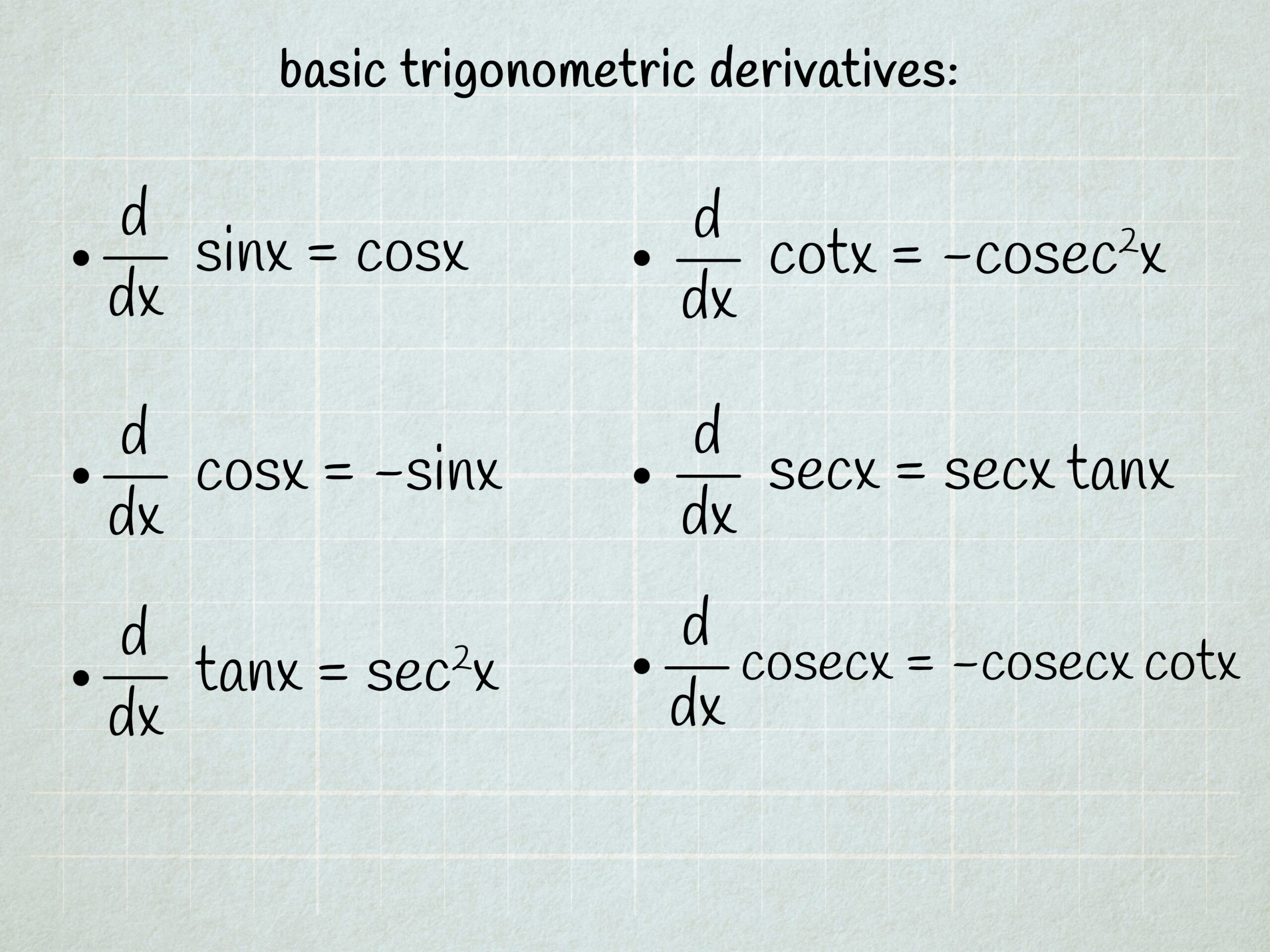
Functions involving sine, cosine, tangent, logarithms, and exponentials often require multiple rules simultaneously. A derivative calculator makes these calculations easier and more understandable.
Helping Students Build Confidence
Advanced calculus can feel intimidating for many students. Long equations and difficult formulas often create frustration and anxiety. A derivative calculator helps reduce this stress by offering quick assistance and reliable solutions.
When students consistently check their work and see accurate answers, they gain confidence in their mathematical abilities. This confidence encourages them to practice more problems and improve their understanding of calculus concepts.
A derivative calculator also helps learners become more independent because they can study complex topics without constantly relying on teachers or tutors.
Supporting Engineering and Scientific Applications
Derivatives play a major role in real-world applications. Engineers use derivatives to study motion, velocity, acceleration, and optimization problems. Scientists apply differentiation in physics, chemistry, biology, and environmental studies.
A derivative calculator becomes extremely useful when solving equations related to:
Motion and Velocity
Physics problems often require derivatives to calculate speed and acceleration. A derivative calculator helps solve these equations quickly and accurately.
Optimization Problems
Businesses and engineers frequently use calculus to maximize profits or minimize costs. A derivative calculator simplifies optimization tasks and improves efficiency.
Machine Learning and Data Science
Modern technologies such as artificial intelligence and data science rely heavily on calculus. Derivatives are used in algorithms, gradient descent, and predictive modeling. A derivative calculator supports professionals working with these advanced systems.
Assisting with Homework and Exam Preparation
Students preparing for exams often need to solve dozens of calculus problems within limited time. A derivative calculator becomes a valuable study companion because it allows users to practice efficiently.
Learners can attempt problems manually and then use a derivative calculator to verify their answers. This process helps identify weaknesses and improves problem-solving skills. It also saves time when reviewing large sets of practice questions.
For homework assignments, a derivative calculator ensures that students complete tasks more accurately while still learning the underlying methods.
Making Advanced Calculus More Accessible
Not every student learns mathematics at the same pace. Some learners struggle with complicated calculations while still understanding the concepts conceptually. A derivative calculator makes advanced calculus more accessible to these students.
Instead of getting stuck on algebraic manipulation, learners can focus on understanding how derivatives work and why they matter. This creates a more inclusive learning environment and encourages more students to succeed in mathematics-related fields.
A derivative calculator also benefits online learners who may not always have immediate access to classroom support or tutoring services.
Encouraging Independent Learning
Technology has transformed education, and digital tools now play a significant role in self-study. A derivative calculator empowers students to learn independently by exploring advanced calculus topics at their own pace.
Learners can experiment with different functions, compare solutions, and analyze patterns in derivatives. This interactive approach improves curiosity and deeper understanding of mathematical principles.
Independent learning supported by a derivative calculator also prepares students for higher education and professional environments where self-reliance is essential.
Reducing Stress in Advanced Mathematics
Many students experience stress when dealing with difficult calculus equations. Repeated mistakes and confusing steps can lower motivation. A derivative calculator helps reduce this frustration by providing instant guidance and correct solutions.
Instead of feeling overwhelmed, students can use the tool as a support system while continuing to strengthen their mathematical knowledge. This balanced approach improves both performance and confidence in advanced calculus.
The Future of Mathematics Education
As technology continues to evolve, digital tools are becoming increasingly important in education. A derivative calculator represents how technology can enhance learning rather than replace it. Students still need to understand concepts and problem-solving methods, but calculators make advanced mathematics more efficient and approachable.
Educational institutions are also integrating technology into classrooms, encouraging students to combine traditional learning with modern tools. A derivative calculator fits perfectly into this evolving educational landscape.
Conclusion
A derivative calculator is far more than a simple mathematical shortcut. It is an essential tool for solving advanced calculus problems efficiently and accurately. From saving time and improving accuracy to enhancing learning and reducing stress, the benefits are significant for both students and professionals.
Advanced calculus often involves highly complex equations that can become overwhelming when solved manually. A derivative calculator simplifies these challenges while helping users understand important mathematical concepts through step-by-step solutions.
Whether someone is preparing for exams, working on engineering projects, studying machine learning, or exploring scientific research, a derivative calculator provides valuable support. By combining technology with education, learners can develop stronger calculus skills, gain confidence, and approach advanced mathematics with greater success.