
Introduction
In today’s competitive manufacturing environment, speed is often just as important as quality. Businesses need to transform product concepts into physical prototypes and Rapid Tooling Service market-ready products faster than ever. Traditional tooling methods can require significant time and investment, especially when a product is still being tested or modified. This is where a Rapid Tooling Service provides an efficient solution. By combining modern manufacturing technologies, advanced materials, and streamlined production processes, rapid tooling helps manufacturers create molds, dies, and production tools in a shorter timeframe.
Rapid tooling bridges the gap between prototyping and full-scale manufacturing. It allows engineers and product designers to test designs, identify problems, make improvements, and prepare for production without waiting through lengthy traditional tooling processes. As industries continue to demand shorter development cycles, rapid tooling has become an important part of modern product development.
What Is Rapid Tooling?
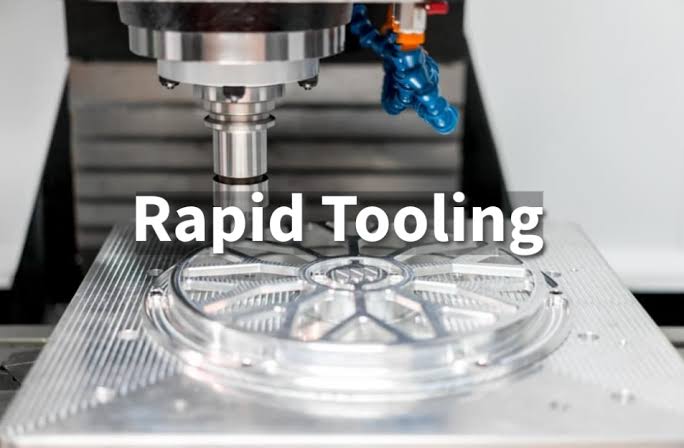
Rapid tooling refers to the process of producing manufacturing tools, molds, and dies quickly using advanced technologies and efficient production techniques. Unlike conventional tooling, which may involve long machining and finishing processes, rapid tooling can use technologies such as CNC machining, 3D printing, additive manufacturing, and specialized molding techniques.
The primary objective is to reduce the time between product design and manufacturing. Depending on the project requirements, rapid tooling can be used to create prototype molds, low-volume production molds, functional testing components, and tools for bridge production.
This approach gives manufacturers greater flexibility during the early stages of product development. Instead of committing to expensive permanent tooling immediately, companies can use rapid tooling to evaluate their products before moving to large-scale production.
How Rapid Tooling Speeds Up Product Development
One of the biggest advantages of rapid tooling is its ability to shorten product development timelines. Traditional tooling can take weeks or even months depending on the complexity of a mold. Rapid tooling uses streamlined manufacturing methods to significantly reduce this waiting period.
Once a digital design has been approved, manufacturers can quickly produce tooling for prototype or limited production purposes. Engineers can then test the actual components produced from the tool rather than relying entirely on computer simulations.
If a design problem is discovered, modifications can often be made more quickly. This creates a faster design-test-improve cycle and helps companies move confidently toward final production.
Supporting Faster Prototyping
Prototyping is an essential part of product development because it allows designers to evaluate the shape, performance, usability, and manufacturability of a product. Rapid tooling makes functional prototyping more practical by providing tools that can produce realistic parts.
For example, a manufacturer developing a new plastic enclosure may need several physical versions before finalizing the design. With rapid tooling, prototype molds can be created quickly, allowing engineers to test different dimensions, materials, and design features.
This reduces dependence on theoretical evaluations and provides valuable real-world feedback. As a result, companies can discover potential problems earlier and avoid costly changes later in the production process.
Cost Advantages of Rapid Tooling
Cost reduction is another important benefit of rapid tooling. Traditional tooling often requires substantial investment in materials, machining, labor, and finishing. Making these investments before a product design has been fully validated can create financial risks.
A Rapid Tooling Service provides a more economical approach for prototypes, low-volume production, and early market testing. Companies can produce functional parts without immediately investing in expensive long-term tooling.
Rapid tooling can also reduce development costs by identifying design issues earlier. Fixing a problem during the prototype stage is generally more manageable than changing production tooling after mass manufacturing has started.
Applications Across Different Industries
Rapid tooling is used in many industries because of its flexibility and ability to support different manufacturing requirements. The automotive industry uses rapid tooling for prototype components, interior parts, housings, and functional testing. Consumer electronics manufacturers can use it to evaluate product housings and mechanical components before large-scale production.
Medical device manufacturers may also benefit from rapid tooling when developing specialized components and testing new designs. Aerospace, industrial equipment, home appliances, and consumer product companies can similarly use rapid tooling to accelerate development.
Its usefulness is particularly valuable for products that require multiple design iterations or have relatively short market lifecycles.
Rapid Tooling and Low-Volume Manufacturing
Rapid tooling is not limited to prototypes. It can also support low-volume and bridge production. Businesses launching a new product may not immediately require thousands or millions of parts. They may need a smaller quantity for market testing, customer evaluation, or initial sales.
Instead of investing in expensive high-volume tooling immediately, manufacturers can use rapid tooling to produce an appropriate number of components. This allows companies to test market demand while keeping initial investment under control.
Once demand has been confirmed, businesses can transition to more durable production tooling for larger manufacturing volumes.
Technologies Used in Rapid Tooling
Several technologies contribute to the efficiency of rapid tooling. CNC machining is commonly used to manufacture precise molds and tools from materials such as aluminum and steel. 3D printing and additive manufacturing can create tooling components and prototype molds directly from digital designs.
Vacuum casting, soft tooling, and other specialized techniques can also be used depending on the product material, quantity, and required accuracy. The right technology is selected according to factors such as production volume, tool durability, part complexity, surface finish, and budget.
Combining these technologies gives manufacturers more options for developing tooling that meets specific project requirements.
Improving Design Validation
A major benefit of rapid tooling is improved design validation. A digital model may look correct on a computer screen, but physical manufacturing can reveal issues that are difficult to predict.
With rapid tooling, engineers can create real components and examine how they perform under practical conditions. They can evaluate dimensions, assembly, strength, appearance, and functionality.
This process helps reduce manufacturing risks and increases confidence before a product enters full-scale production. It also encourages collaboration between designers, engineers, and manufacturing teams.
Choosing the Right Rapid Tooling Service
When selecting a Rapid Tooling Service, businesses should consider several factors. Manufacturing experience, equipment capabilities, material options, dimensional accuracy, production capacity, and quality control are all important.
Companies should also consider whether the service provider can support design modifications and deliver tooling within the required schedule. Clear communication is essential because tooling projects often involve multiple design revisions.
A reliable provider should understand both the technical and commercial requirements of a project. This helps ensure that the final tooling meets performance expectations while remaining practical in terms of cost and production time.
The Future of Rapid Tooling
As manufacturing technology continues to develop, rapid tooling is expected to become even faster and more flexible. Advances in additive manufacturing, automation, computer-aided design, and digital manufacturing are creating new opportunities for efficient tooling production.
Digital workflows can reduce manual processes and allow design files to move quickly from engineering teams to manufacturing equipment. Improved materials can also increase the durability and performance of rapidly produced tools.
These developments will help manufacturers respond more quickly to changing customer demands and competitive markets.
Conclusion
A Rapid Tooling Service provides manufacturers with an effective way to shorten development cycles, reduce early-stage costs, and improve product validation. By enabling faster production of molds, dies, and manufacturing tools, rapid tooling helps businesses move efficiently from concept to prototype and eventually to full production.
Its applications extend across automotive, electronics, medical, aerospace, consumer products, and many other industries. Whether a company needs functional prototypes, low-volume components, or bridge production, rapid tooling offers flexibility and speed.
As modern manufacturing continues to prioritize efficiency and innovation, rapid tooling will remain an important solution for companies seeking to develop products faster while maintaining quality and controlling costs.