
Introduction
As aging infrastructure continues to challenge municipalities, industrial facilities, and utility providers, maintaining underground pipelines has become more important than ever. Replacing damaged pipelines through traditional excavation methods is often expensive, time-consuming, and disruptive to surrounding communities. Fortunately, modern engineering has introduced more efficient alternatives that restore the structural integrity of existing pipelines without extensive digging. Among these innovations, Pipeline Rehabilitation & CIPP Liner Design has emerged as one of the most reliable and cost-effective solutions for extending the service life of underground piping systems.
By combining advanced engineering principles with trenchless technology, Pipeline Rehabilitation & CIPP Liner Design allows deteriorated pipelines to regain their structural strength while minimizing environmental impact, traffic disruptions, and project costs. These solutions are widely used in municipal sewer systems, stormwater networks, industrial pipelines, and various utility infrastructures around the world.
Understanding Pipeline Rehabilitation
Pipeline rehabilitation is the process of restoring existing pipelines rather than replacing them entirely. Over time, pipelines suffer from corrosion, cracks, joint failures, root intrusion, ground movement, chemical attack, and general aging. Left untreated, these defects can result in leaks, reduced flow capacity, environmental contamination, and costly emergency repairs.
Instead of excavating and replacing long sections of pipe, rehabilitation methods restore the existing infrastructure from within. This significantly reduces project duration, labor costs, and disturbances to roads, buildings, and surrounding landscapes.
Modern rehabilitation techniques include pipe bursting, slip lining, spray lining, and cured-in-place pipe systems. Among these, Pipeline Rehabilitation & CIPP Liner Design has become the preferred choice due to its versatility and long-term performance.
What Is CIPP Liner Design?
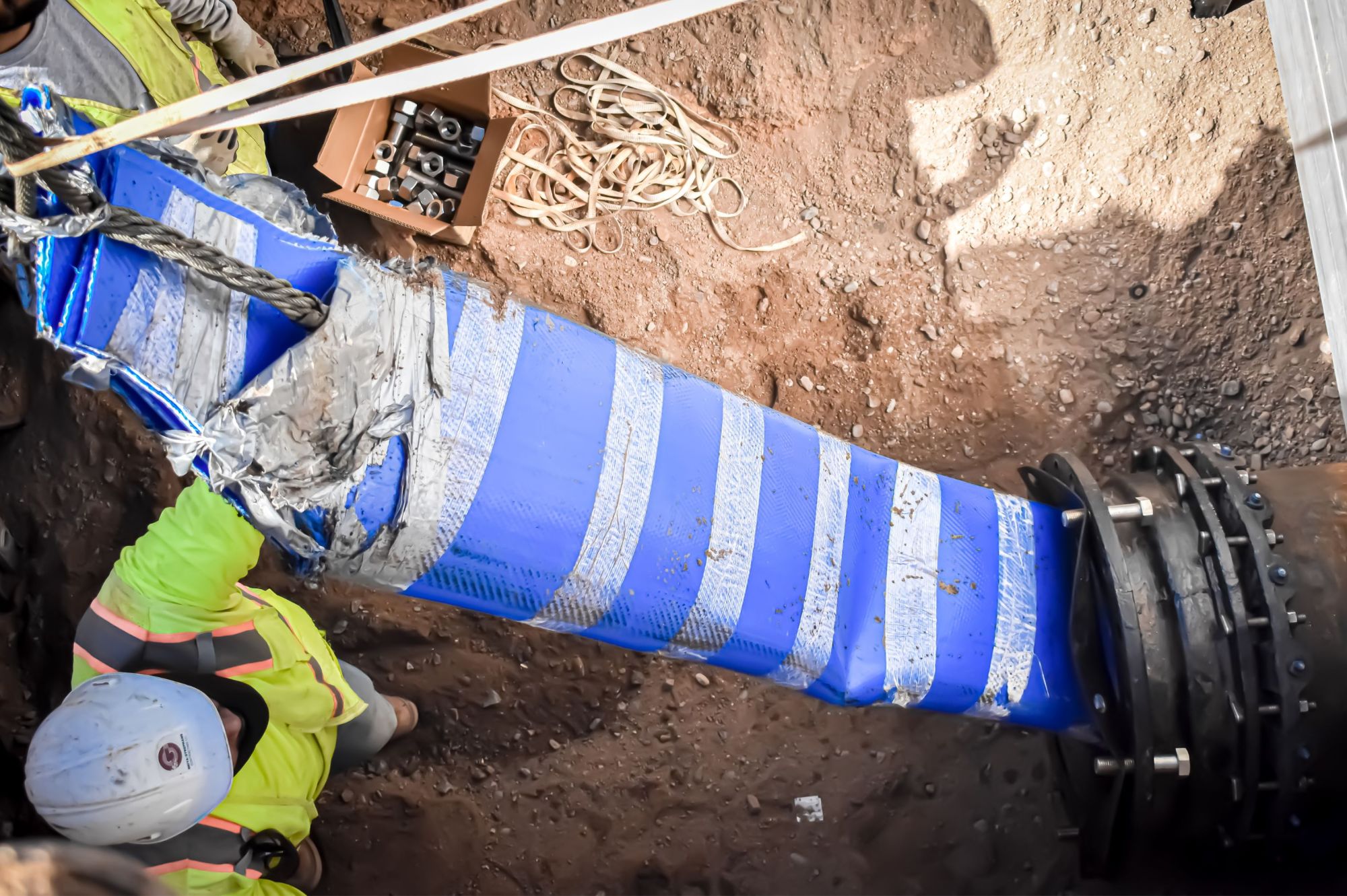
Cured-In-Place Pipe (CIPP) lining is a trenchless rehabilitation method that creates a new pipe within an existing damaged pipeline. A flexible liner saturated with specially formulated resin is inserted into the existing pipe. The liner is then expanded against the interior pipe wall and cured using hot water, steam, or ultraviolet light.
Once cured, the liner forms a seamless, jointless, corrosion-resistant pipe capable of carrying structural loads independently or in conjunction with the host pipe.
Effective Pipeline Rehabilitation & CIPP Liner Design requires careful engineering analysis that considers multiple factors, including:
- Existing pipe condition
- Soil loading
- Groundwater pressure
- Internal operating pressure
- Pipe diameter
- Ovality
- Long-term material properties
- Design service life
- Installation conditions
Proper engineering ensures the rehabilitated pipeline meets safety standards while delivering decades of reliable performance.
Benefits of Pipeline Rehabilitation & CIPP Liner Design
The growing popularity of Pipeline Rehabilitation & CIPP Liner Design is driven by numerous practical advantages over conventional pipe replacement.
Minimal Excavation
One of the greatest benefits is the elimination of extensive excavation. Since installation occurs through existing access points such as manholes, disruption to roads, sidewalks, landscaping, and nearby properties is greatly reduced.
Lower Project Costs
Although engineering design remains critical, rehabilitation projects generally cost less than full pipeline replacement. Savings result from reduced excavation, shorter construction schedules, fewer labor requirements, and minimized surface restoration.
Faster Installation
Traditional pipeline replacement may require weeks or months to complete. CIPP installation can often rehabilitate long pipeline sections within days, allowing utilities to resume normal operations quickly.
Increased Service Life
Properly designed CIPP liners commonly provide an expected service life exceeding 50 years. High-quality materials resist corrosion, chemical attack, abrasion, and biological deterioration.
Improved Hydraulic Performance
The smooth interior surface of cured liners reduces friction losses, improving flow efficiency despite the slightly smaller internal diameter created by the liner.
Environmental Protection
Reduced excavation minimizes soil disturbance, decreases carbon emissions associated with heavy equipment, and limits waste generated from pipe removal.
Engineering Considerations in CIPP Liner Design
Successful Pipeline Rehabilitation & CIPP Liner Design depends on comprehensive engineering evaluations before installation begins.
Condition Assessment
Engineers first inspect the existing pipeline using CCTV cameras, laser profiling, sonar inspection, and other advanced technologies. These inspections identify structural defects, deformation, infiltration, and obstructions that influence liner design.
Structural Design
The liner must withstand both internal and external loads throughout its service life. Structural calculations evaluate:
- Earth loads
- Live traffic loads
- Hydrostatic pressure
- Buckling resistance
- Long-term creep
- Safety factors
Industry standards such as ASTM and relevant engineering guidelines provide design methodologies to ensure reliable performance.
Material Selection
Several resin systems are available depending on project requirements:
- Polyester resin
- Vinyl ester resin
- Epoxy resin
Each offers unique advantages regarding chemical resistance, curing characteristics, mechanical strength, and installation conditions.
Liner fabrics may include polyester felt, fiberglass reinforcement, or composite materials to achieve required structural properties.
Installation Method
Different curing methods affect both installation efficiency and final liner characteristics.
Common curing techniques include:
- Hot water curing
- Steam curing
- UV light curing
The selection depends on pipe size, project location, liner material, and construction schedule.
Applications Across Multiple Industries
Pipeline rehabilitation technologies serve a wide variety of industries and infrastructure systems.
Municipal governments use CIPP systems to rehabilitate aging sanitary sewer networks, stormwater drainage systems, and combined sewer systems.
Industrial facilities apply CIPP technology to process piping, chemical wastewater systems, cooling water pipelines, and utility infrastructure where minimizing operational downtime is essential.
Water utilities rehabilitate transmission pipelines while reducing interruptions to public water service.
Transportation agencies restore drainage culverts beneath highways and railways without disrupting traffic.
Commercial developments, airports, universities, hospitals, and military facilities also benefit from trenchless rehabilitation methods that preserve existing infrastructure while controlling maintenance costs.
Challenges in Pipeline Rehabilitation Projects
Although highly effective, rehabilitation projects require careful planning to overcome several engineering challenges.
Accurate assessment of pipe deterioration is essential because hidden defects may influence structural requirements.
Proper cleaning and preparation of the host pipe directly affect liner bonding and long-term performance.
Temperature, groundwater conditions, bypass pumping, and access limitations can complicate installation procedures.
Quality assurance during resin impregnation, liner installation, curing, and final inspection is critical to achieving design expectations.
Experienced engineers and qualified contractors help ensure every stage of the rehabilitation process meets applicable specifications and performance standards.
Future Trends in Pipeline Rehabilitation Technology
Pipeline rehabilitation continues to evolve through advancements in engineering materials, inspection technologies, and digital modeling.
Artificial intelligence and machine learning increasingly assist engineers in analyzing CCTV inspection data to identify defects more accurately.
Digital twins and advanced asset management software enable utility owners to prioritize rehabilitation projects based on pipeline condition and risk assessments.
New composite liner materials continue to improve structural capacity while reducing installation time.
Robotic installation equipment enhances safety by minimizing confined-space entry and improving installation consistency.
Sustainability initiatives are also driving innovation, encouraging environmentally friendly resins and lower-energy curing methods that reduce carbon emissions throughout rehabilitation projects.
Conclusion
Maintaining aging underground infrastructure is one of today’s greatest engineering challenges. Rather than relying on expensive and disruptive pipeline replacement, utilities and facility owners increasingly recognize the value of Pipeline Rehabilitation & CIPP Liner Design as an efficient, durable, and sustainable alternative.
With careful engineering analysis, proper material selection, and professional installation, rehabilitated pipelines can achieve decades of reliable performance while minimizing environmental impact and reducing project costs. As trenchless technologies continue to advance, Pipeline Rehabilitation & CIPP Liner Design will remain at the forefront of modern infrastructure renewal, helping communities, industries, and utilities extend the service life of critical pipeline systems safely, efficiently, and economically.