
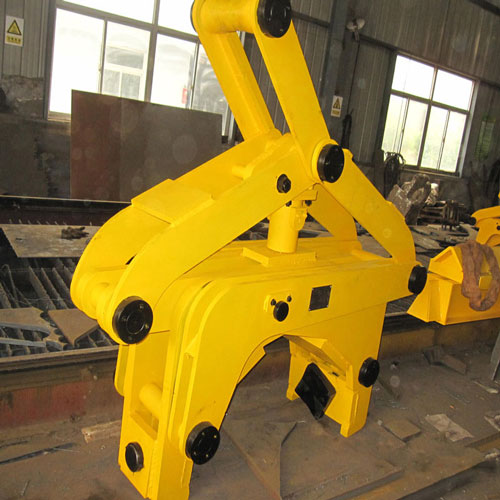
In metal manufacturing and steel production, handling heavy ingots has always been a demanding and high-risk task. Traditional lifting and rotating methods often require multiple workers, significant manual effort, and careful coordination to avoid accidents. These processes can slow down production lines and increase operational costs. As industries move toward automation, the need for safer, faster, and more precise handling equipment has become critical. One of the most impactful innovations addressing these challenges is the Automatic Rotating Ingot Tong, designed to streamline ingot lifting, rotation, and placement while minimizing human intervention and maximizing efficiency in industrial environments.
What is an Automatic Rotating Ingot Tong
The Automatic Rotating Ingot Tong is a specialized mechanical lifting device used in foundries and steel plants to handle hot, heavy ingots with precision. Unlike traditional tongs that require manual adjustment and positioning, this system automatically grips and rotates ingots during transport. The Automatic Rotating Ingot Tong is engineered with hydraulic or motor-driven mechanisms that ensure secure gripping and controlled rotation without sudden movements. This reduces the need for workers to physically adjust loads, improving both safety and productivity. By integrating automation into a traditionally manual process, it significantly enhances operational flow in high-temperature industrial settings.
Enhanced Safety and Reduced Labor Strain
One of the most important benefits of using an Automatic Rotating Ingot Tong is the dramatic improvement in workplace safety. Ingot handling involves extreme heat, heavy loads, and potentially hazardous environments. Manual rotation and positioning expose workers to burns, crush injuries, and fatigue-related errors. With an Automatic Rotating Ingot Tong, operators can manage the entire lifting and rotating process from a safe distance using control systems. This reduces direct human exposure to danger zones and minimizes physical strain. Over time, this leads to fewer workplace injuries, lower compensation costs, and improved employee well-being, all of which contribute to a more stable and efficient workforce.
Faster Handling and Increased Production Throughput
Speed is a critical factor in industrial production, and delays in material handling can significantly impact output. The Automatic Rotating Ingot Tong accelerates the entire lifting and transfer process by eliminating manual adjustments and reducing downtime between operations. Its automated rotation capability allows ingots to be positioned precisely in a single motion, rather than multiple manual steps. This streamlined workflow increases production throughput and ensures that downstream processes, such as forging or rolling, receive materials without delay. As a result, factories can maintain continuous production cycles, reduce bottlenecks, and meet higher output demands more effectively.
Precision and Control in Rotation and Placement
Accuracy in ingot placement is essential for maintaining quality and consistency in metal processing. The Automatic Rotating Ingot Tong provides superior control over the rotation angle and positioning of each ingot. This ensures that materials are placed exactly where needed, reducing the risk of misalignment or damage. The precision offered by the Automatic Rotating Ingot Tong also helps in maintaining uniform heating and processing conditions, which directly affects the quality of the final product. Advanced control systems allow operators to make fine adjustments remotely, ensuring that every movement is smooth, controlled, and repeatable across multiple production cycles.
Energy and Cost Efficiency Benefits
Industrial operations are constantly seeking ways to reduce costs while maintaining output quality. The Automatic Rotating Ingot Tong contributes significantly to energy and cost efficiency by optimizing handling processes. Since it reduces the need for multiple workers and minimizes idle time, labor costs are significantly lowered. Additionally, its efficient mechanical design reduces unnecessary energy consumption during operation. Fewer handling errors also mean reduced material waste and equipment damage. Over time, the investment in an Automatic Rotating Ingot Tong pays off through lower operational expenses, improved resource utilization, and enhanced productivity across the entire manufacturing system.
Integration in Modern Steel and Metal Industries
Modern steel plants are increasingly adopting automation technologies to remain competitive, and the Automatic Rotating Ingot Tong plays a key role in this transformation. It integrates seamlessly with cranes, conveyor systems, and robotic production lines, creating a fully automated material handling environment. This integration allows for synchronized operations where ingot lifting, rotation, and transfer are coordinated with other production stages. The Automatic Rotating Ingot Tong also supports data-driven manufacturing systems, where performance metrics can be monitored and optimized in real time. This level of integration enhances overall plant efficiency and supports the shift toward smart manufacturing.
Future of Automated Material Handling
As industrial automation continues to evolve, the role of intelligent handling systems like the Automatic Rotating Ingot Tong will become even more significant. Future advancements may include AI-driven control systems, predictive maintenance, and enhanced sensor technology to further improve precision and reliability. These innovations will allow the Automatic Rotating Ingot Tong to adapt dynamically to different load conditions and operational requirements. In the long term, such technologies will redefine how heavy materials are handled in industrial environments, making production processes safer, faster, and more efficient than ever before.